
Are you preparing for the DELF B2 exam? Mastering the right vocabulary is essential for your success. In this comprehensive guide, we will explore the most common vocabulary topics you need to know to excel in your DELF B2 exam.
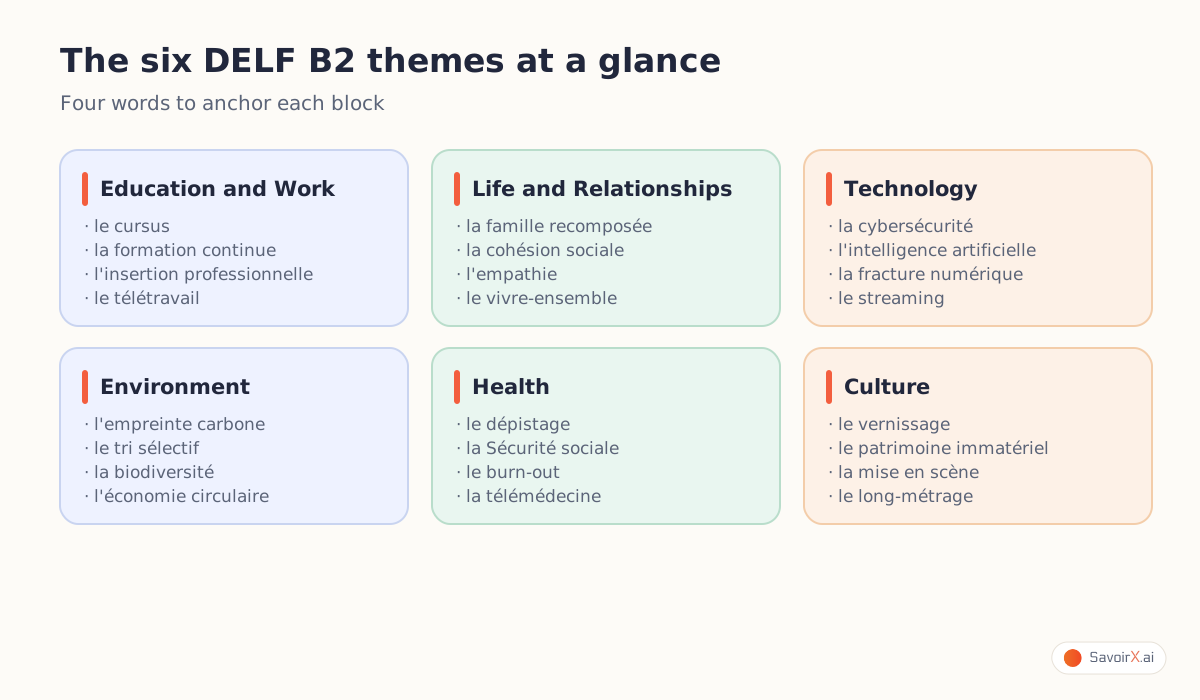
The DELF B2 assesses your ability to understand and express yourself on a variety of complex subjects. To help you prepare effectively, we have compiled an essential lexicon covering six main topics:
Education and Work • Life and Relationships • Technology • Environment • Health • Culture
Each section presents targeted vocabulary, including nouns, verbs, and expressions commonly used in these contexts. By mastering this vocabulary, you will be better equipped to understand texts, participate in discussions, and write essays on these various topics.
How to work through this list
- Take one theme at a time instead of reading end to end. A block a day sticks; a whole page in one sitting does not.
- Learn every noun together with its article. Gender is graded, and le or la is far easier to fix now than in the exam room.
- Turn the verbs into sentences about your own life. A word you have used once is a word you keep.
The themes covered in this guide
Each block below lists the nouns first, then the verbs and set phrases that go with them.
Education and Work
Study and employment come up in almost every B2 paper, from a debate on school reform to a letter about working conditions. This is the block to know best.
L'éducation
Vocabulary
le cursus, le parcours académique, la pédagogie différenciée, l'enseignement supérieur, la formation initiale, le tronc commun, la filière, le redoublement, l'absentéisme, la déscolarisation, l'illettrisme, la certification
Verb and Expression
s'orienter, se spécialiser, valider des acquis, décrocher (un diplôme), approfondir, assimiler, inculquer, vulgariser...
La vie étudiante
Vocabulary
le campus, l'amphithéâtre, le numerus clausus, la prépa, le concours, le tutorat, le mémoire, la thèse, le doctorat, l'agrégation, la bourse au mérite, la mobilité internationale
Verb and Expression
rédiger, soutenir, débattre, disserter, collaborer, s'expatrier, budgétiser, s'émanciper...
Le monde du travail
Vocabulary
le marché de l'emploi, la hiérarchie, le management, la rémunération, la convention collective, le plan social, la flexibilité, la productivité, le présentéisme, la pénibilité, l'insertion professionnelle
Verb and Expression
recruter, promouvoir, licencier, négocier, déléguer, superviser, optimiser, restructurer...
Les conditions de travail
Vocabulary
l'ergonomie, le télétravail, la charge mentale, le burn-out, le harcèlement moral, la discrimination positive, le plafond de verre, l'équilibre vie professionnelle-vie personnelle
Verb and Expression
aménager, flexibiliser, revendiquer, légiférer, concilier, décompresser, s'épanouir...
Les compétences
Vocabulary
la polyvalence, l'adaptabilité, le savoir-être, l'intelligence émotionnelle, la pensée critique, la proactivité, l'assertivité, la résilience
Verb and Expression
développer, perfectionner, valoriser, transposer, cultiver, optimiser, capitaliser...
La formation continue
Vocabulary
la formation en alternance, la VAE (Validation des Acquis de l'Expérience), le bilan de compétences, la reconversion professionnelle, l'apprentissage tout au long de la vie, le e-learning
Verb and Expression
se recycler, se perfectionner, se reconvertir, actualiser, consolider, pérenniser...
L'évolution professionnelle
Vocabulary
l'avancement, la mutation, la mobilité interne/externe, l'expatriation, le plan de carrière, la reconversion, la bifurcation professionnelle
Verb and Expression
gravir les échelons, se réorienter, diversifier, s'expatrier, évoluer transversalement...
Les défis professionnels
Vocabulary
la compétitivité, l'obsolescence des compétences, la transition numérique, la mondialisation, l'innovation disruptive, la gestion du stress, la résilience organisationnelle
Verb and Expression
anticiper, s'adapter, innover, persévérer, se démarquer, surmonter, exceller...
Written French first, spoken French second
Most of the nouns in these blocks belong to careful written French. They fit an essay, a report or a letter to an administration, which is exactly where the B2 written papers place you. In a conversation you would normally reach for a plainer wording, so keep the two apart as you revise: this page is what you write, and only sometimes what you say.
Life and Relationships
Family, friendship and social tension supply most of the opinion topics. The nouns here let you name a problem precisely instead of describing it in three clauses.
Technology
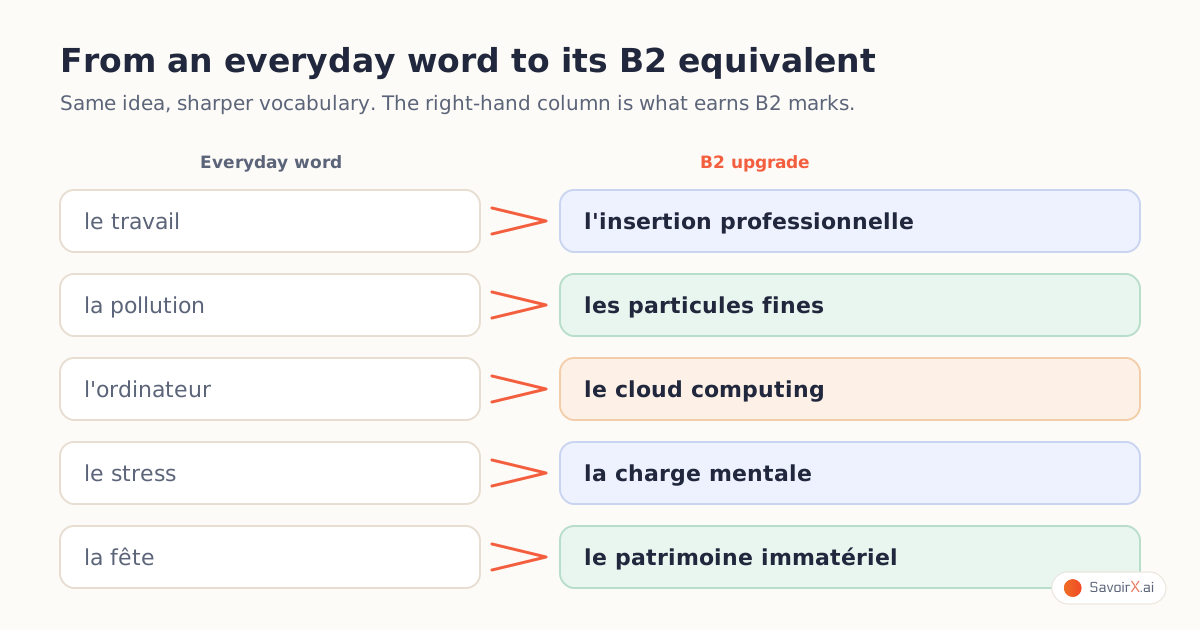
Technology topics reward specific terms. Naming the mechanism, rather than calling it a change, is what separates a B2 answer from a B1 one.
Words that look English and behave in French
French has borrowed a number of these terms whole, and once borrowed they take a French article and a French plural: le management, le burn-out, le e-learning, le cloud computing, le streaming. Written with their article they read as ordinary French. Written bare, they read as an English word dropped into a French sentence, and an examiner notices.
Environment
Environmental questions are the most predictable of all B2 subjects, and also the most technical. These words carry the argument for you.
Health
Health appears both as a personal subject and as a public policy question, so the block runs from symptoms to health systems.
Culture
Cultural topics ask you to describe and to judge. Pair the nouns with the verbs on the right and a review writes itself.
Anchor words, one per theme
If you can produce these without hesitating, the rest of the theme tends to come back with them.
Set phrases to keep whole
Native speakers store these as single units. Learn them the same way and they arrive ready-made on exam day.
Turning the list into a revision plan
Spread the themes over four weeks rather than four evenings. In the first fortnight, read one block aloud each day and write five sentences with it. In week three, cover the verb column and rebuild it from the nouns. In week four, take the quiz for each theme and write down only the words you missed. A short list of gaps is worth more than a second reading of the whole page.