Free DELF Practice Tests Online: Complete Resource Guide
Looking for free DELF practice tests? You're in the right place. This guide covers all the legitimate free resources for DELF A2, B1, and B2 practice, plus affordable options when you're ready for more comprehensive preparation.
What this guide covers
Official sources: where the real exam papers live and how to use them.
Free practice by skill: reading, writing, and listening, level by level.
Where free runs out: the point at which feedback matters more than volume.
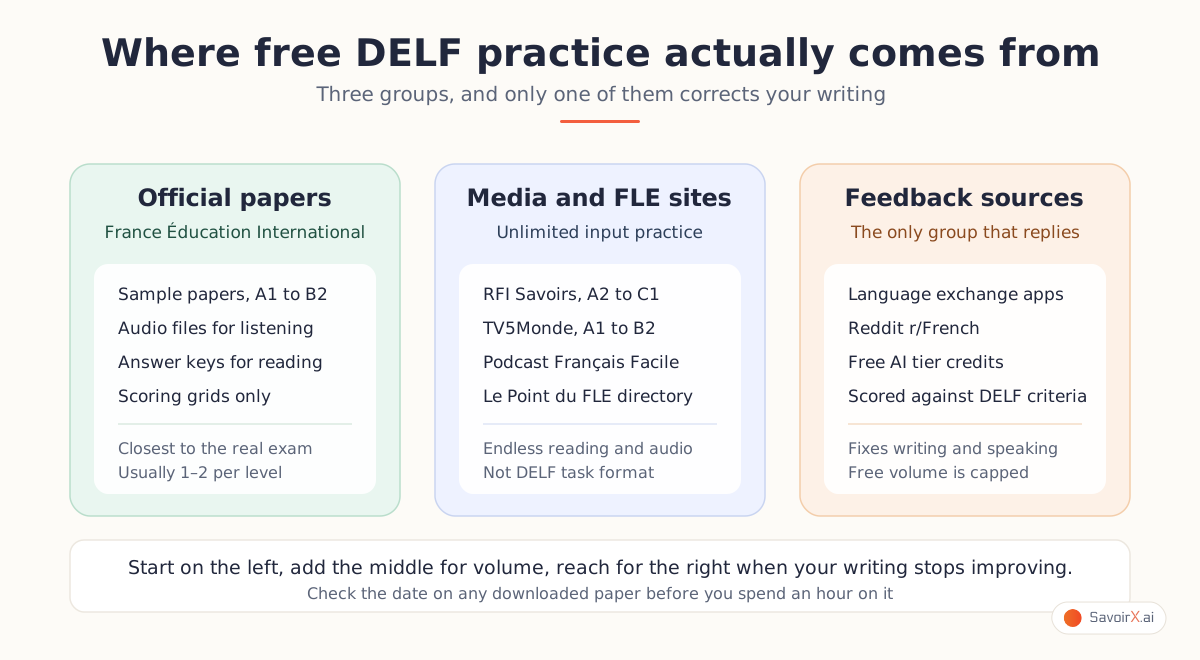
France Éducation international (formerly CIEP), the organization that creates DELF exams, provides official sample papers for free. These are the only materials written by the same people who write your exam, so they belong at the top of any free study plan.
Website: france-education-international.fr
What's available at no cost
Sample papers for each level (A1, A2, B1, B2)
Audio files for listening comprehension
Answer keys for reading comprehension
Scoring grids for writing and speaking
A five-step routine for one sample paper
1. Download the PDF for your target level
2. Set a timer and practice under real exam conditions
3. For listening: use the audio files (usually MP3)
4. For writing: write your response, then check the scoring criteria
5. For reading: complete all questions, then check with the answer key
Limitation: Official samples are limited (usually 1-2 per level), and there's no feedback on your writing or speaking - just the criteria.
Each skill has a different free-resource landscape. Reading and listening are well served; writing is where the free options thin out quickly.
Free reading resources
| Resource |
Levels |
What You Get |
Link Type |
| France Éducation international | A1-B2 | Official sample tests | PDF download |
| RFI Savoirs | A2-B2 | News articles with exercises | Online |
| TV5Monde | A1-B2 | Video comprehension exercises | Online |
| Le Point du FLE | All | Curated exercise links | Directory |
Tip: For DELF-specific practice, prioritize official samples over general comprehension exercises.
Writing is the hardest skill to practice for free because you need feedback on your work.
Free writing options and what they actually give you
| Resource |
What You Get |
Feedback Quality |
| Official sample topics | Real exam prompts | No feedback - self-evaluate with rubric |
| Language exchange apps | Native speaker corrections | Variable quality, not DELF-specific |
| Reddit r/French | Community corrections | Helpful but inconsistent |
Better option: Platforms like SavoirX offer limited free writing submissions with AI feedback scored against DELF criteria - much more useful than practicing without feedback.
If you want to see one marked up: DELF B1 sample answer with corrections (PDF), DELF B2 sample answer with corrections (PDF), TCF Canada writing sample (PDF).
Free listening resources
| Resource |
Levels |
Format |
Cost |
| RFI Savoirs | A2-C1 | News with exercises | Free |
| France Éducation international | A1-B2 | Official samples | Free |
| TV5Monde | A1-B2 | Video exercises | Free |
| Podcast Français Facile | A1-B2 | Podcast with transcripts | Free |
DELF-Specific Tip: Official audio samples are recorded in testing conditions (clear audio, controlled pace). Real-world audio from RFI or podcasts is harder - practice with both.
Check the date before you trust a free paper. Free DELF material circulates for years on file-sharing sites and old blogs, and some of it predates the current exam format. Before you spend an hour on a downloaded paper, confirm it matches the task types and word counts described for your level below. When in doubt, use the sample on the France Éducation international site instead.
The task types change noticeably between A2, B1, and B2, so the resource that suits one level can be close to useless at another.
What A2 tests
Reading: Simple texts (ads, emails, schedules)
Writing: Short personal messages (60-80 words)
Listening: Everyday announcements, conversations
Speaking: Guided conversation, role-play
Best free resources: the official A2 sample from France Éducation international, TV5Monde A2 exercises, and RFI Journal en français facile for listening.
What B1 tests
Reading: Articles, letters, forum posts
Writing: Personal essay expressing opinion (160-180 words)
Listening: Radio extracts, announcements
Speaking: Discussion of a document
Best free resources: the official B1 sample from France Éducation international, RFI Savoirs B1 comprehension exercises, and French newspaper articles (Le Monde, Le Figaro) for reading practice.
What B2 tests
Reading: Argumentative texts, editorials
Writing: Formal letter or argumentative essay (250+ words)
Listening: Debates, presentations, interviews
Speaking: Defending a viewpoint on a complex topic
Best free resources: the official B2 sample from France Éducation international, RFI Savoirs B2 exercises, French podcasts and interviews for authentic listening, and editorials from Courrier International for reading.
Before deciding where to spend money, it helps to see the two columns side by side.
| Advantage |
Limitation |
| Official exam format | Limited number of tests |
| Self-study possible | No feedback on writing |
| No cost | No progress tracking |
| Real exam conditions | No personalized guidance |
Paid features and why they matter
| Feature |
Benefit |
| Many more practice tests | Build stamina and familiarity |
| AI writing feedback | Know exactly where you're losing points |
| DELF-specific scoring | Estimated score before exam day |
| Error tracking | Focus study on your weaknesses |
| Grammar explanations | Understand why answers are correct |
Reality Check: Free resources are sufficient for understanding the exam format. But if writing is your weak point (it is for most students), you'll improve much faster with feedback on your work.
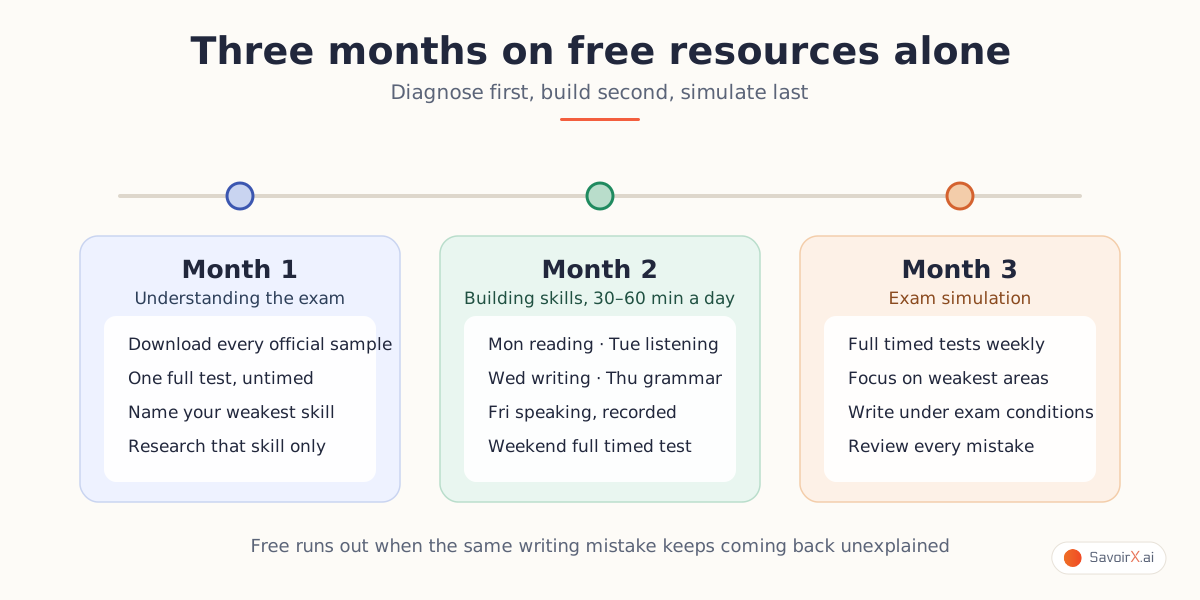
If you're committed to free preparation, here's a structured approach spread across three months.
- Download all official samples for your level
- Complete one full test (untimed) to assess your starting point
- Identify your weakest skill
- Research that skill specifically using free resources
Daily practice (30-60 minutes)
Monday: Reading (one text + questions)
Tuesday: Listening (RFI or TV5Monde)
Wednesday: Writing (one task, self-evaluate with rubric)
Thursday: Grammar review (Le Point du FLE)
Friday: Speaking practice (record yourself)
Weekend: Full practice test (timed)
- Complete full timed tests weekly
- Focus on weakest areas
- Write under exam conditions
- Review all mistakes
Free resources become limiting when:
- You've used all official samples
- You're making the same writing mistakes repeatedly
- You don't know why you got questions wrong
- You want to track progress systematically
At this point, even limited paid access (like free tier credits on SavoirX) provides better value than continuing without feedback.
Since official samples are limited, maximize their value by taking the same paper three times with a different purpose each time.
First attempt — diagnostic
Take the test untimed
Mark questions you're unsure about
Note which question types are hardest
Identify vocabulary gaps
Second attempt — timed practice
Take the same test under real conditions
Practice time management
Don't look at previous answers
Compare scores between attempts
Third attempt — deep analysis
Review every question, right or wrong
Research grammar behind incorrect answers
Add unknown vocabulary to study list
Analyze model answers for writing
If you have a small budget, these options provide much more practice:
Low-budget options compared
| Option |
Cost |
What You Get |
| SavoirX Free Tier | Free | 20 AI credits for writing feedback |
| SavoirX Pro | $15/month | 200 credits, 50+ mock tests |
| Used DELF prep books | $5-15 | Multiple practice tests + answers |
| Alliance Française courses | Varies | Structured prep, may include materials |
Best Value Strategy: start with all free official resources, use free tier credits strategically for writing feedback, and upgrade to paid only in the final month before your exam.
The best free DELF B1 practice tests are the official samples from France Éducation international (france-education-international.fr). These include reading and listening sections with answer keys, plus writing prompts with scoring criteria. For additional practice, RFI Savoirs offers B1-level comprehension exercises that complement official materials.
Free practice tests help you understand the format and assess your level, but they're limited in quantity. Most students benefit from additional practice, especially for writing where feedback is essential. You can pass with free resources if your French level already meets the requirements, but if you need to improve, you'll progress faster with more practice materials and feedback.
Options for free writing feedback include: language exchange partners, Reddit's r/French community, or free tier credits on AI platforms like SavoirX. The challenge with exchange partners and Reddit is that feedback isn't DELF-specific. AI platforms that score against DELF criteria provide more exam-relevant feedback, though free tiers are usually limited.
Aim for at least 5-10 full practice tests before your exam. Space them out: do one test weekly for the last 2-3 months, saving 2-3 tests for the final two weeks for intensive timed practice. If you can only access 1-2 free official samples, supplement with paid resources or use those samples multiple times with different focuses (speed, accuracy, analysis).