
The speaking test is often the most stressful part of DELF for many candidates. Unlike reading or listening, you can't go back and change your answer. But with proper preparation, you can walk into the exam room confident and ready.
This guide covers everything you need to know about the DELF speaking test at every level.
- Name of the exam section production orale
- Levels covered here A1, A2, B1, B2
- Length 5-7 minutes at A1, up to 20 minutes at B2
- Marked out of 25 points, with 5/25 the minimum
- Format face-to-face with one or two examiners
Overview: DELF Speaking Test Structure
The speaking test (production orale) is the final part of every DELF exam. You'll have a face-to-face interview with one or two examiners.
Each level has a specific format and different expectations. The chart below puts the four formats side by side, so you can see how the preparation window grows as the exam gets longer.
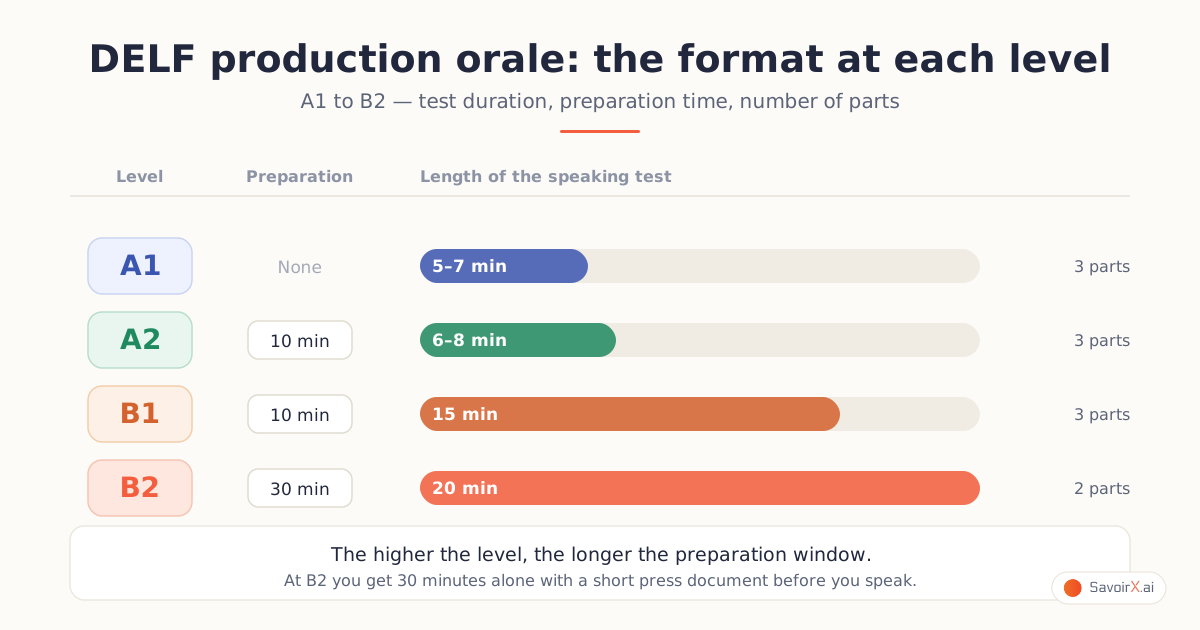
Let's break them down.
DELF A1 Speaking Test
At A1, the speaking test evaluates your ability to handle very basic interactions.
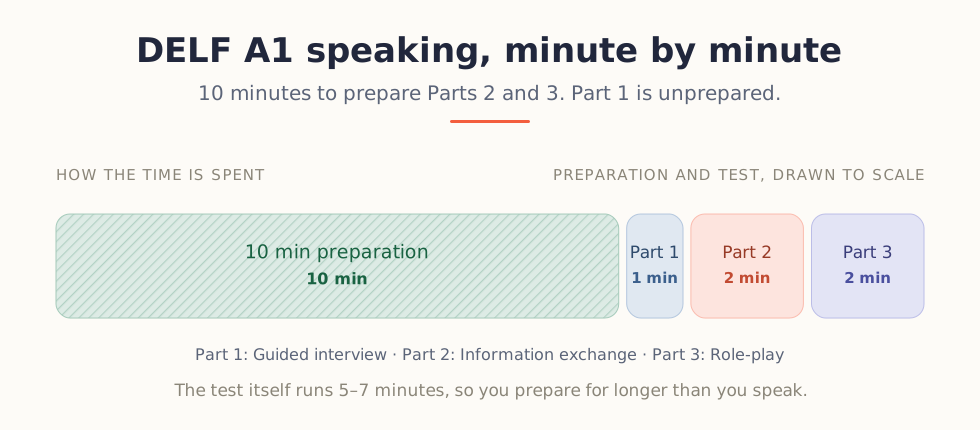
Format
| Part | Duration | Description |
|---|---|---|
| Part 1 | 1 minute | Guided interview about yourself |
| Part 2 | 2 minutes | Information exchange (asking questions) |
| Part 3 | 2 minutes | Role-play simulation |
10 minutes of preparation is given before you go in, for Parts 2 and 3. Part 1 is unprepared.
Part 1: Guided Interview
The examiner asks simple questions about you. Answer in short, complete sentences.
Common topics:
- Your name, age, nationality
- Where you live
- Your family
- Your job or studies
- Your hobbies
The questions are the ones you would expect on a first meeting, and they are always asked in French:
Example questions
Comment vous vous appelez ?
Vous habitez où ?
Qu'est-ce que vous aimez faire ?
Tips:
- Keep answers simple but complete
- Use "je" statements confidently
- Don't worry about complex grammar
Part 2: Information Exchange
You receive cards with words or images. You must ask the examiner questions based on these prompts.
Example prompt: A card showing a movie theater, a clock showing 8pm, tickets
Questions you might ask
Le cinéma est ouvert à quelle heure ?
Combien coûtent les billets ?
Où est le cinéma ?
Tips:
- Use question words: où, quand, comment, combien
- Simple questions are perfect at A1
- Aim for 3-5 questions
Part 3: Role-play
A simple everyday situation. The examiner gives you a scenario and plays the other person.
Example scenarios:
- Buying bread at a bakery
- Ordering at a café
- Asking for directions
Tips:
- Use polite forms: bonjour, s'il vous plaît, merci
- Listen to what the examiner says
- React naturally to their responses
Common A1 Speaking Topics and Sample Answers
A1 questions stay on your own life, and the examiner will use tu or vous consistently. These five come up in almost every session.
Spelling your surname aloud is part of the first task, so rehearse the alphabet. Two or three sentences is enough at A1: the examiner is checking that you can produce simple present-tense sentences about yourself, not that you can hold a conversation. Answering with a single word is the most common way candidates lose points here.
DELF A2 Speaking Test
At A2, you demonstrate the ability to handle routine tasks and social situations.
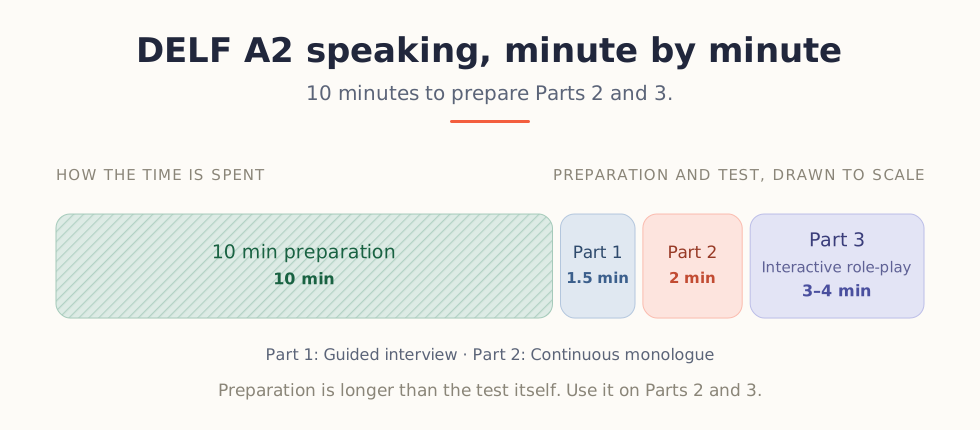
Format
| Part | Duration | Description |
|---|---|---|
| Part 1 | 1.5 minutes | Guided interview |
| Part 2 | 2 minutes | Continuous monologue |
| Part 3 | 3-4 minutes | Interactive role-play |
10 minutes preparation time for Parts 2 and 3.
Part 1: Guided Interview
Similar to A1, but with slightly more complex questions.
Topics include:
- Daily routine
- Past experiences (simple past)
- Plans and preferences
- Descriptions of people and places
Example questions
Qu'est-ce que vous avez fait le week-end dernier ?
Décrivez votre ville.
Quels sont vos projets pour les vacances ?
Part 2: Continuous Monologue
Speak for about 2 minutes on a topic without interruption.
Common topics:
- Describe your typical day
- Talk about a recent trip or experience
- Describe a person important to you
- Explain your hobbies or interests
Two minutes feels long when nobody interrupts you, so walk in with a shape already in mind:
Structure suggestion:
- Introduction (1-2 sentences)
- Main details (4-5 sentences)
- Personal opinion or conclusion
Part 3: Interactive Role-play
A practical situation requiring negotiation or problem-solving.
Example scenarios:
- Buying a train ticket and asking about schedules
- Making a reservation at a restaurant
- Returning an item at a store
- Planning an activity with a friend
Tips:
- Use the preparation time to note key vocabulary
- React to what the examiner says - don't just recite a script
- Use connectors: d'abord, ensuite, enfin
Common A2 Speaking Topics and Sample Answers
A2 moves from facts about you to short accounts of things you have done, so the past tense carries most of the marks. The monologue subjects repeat year after year.
Four more subjects that recur
A2 monologues fail more often for being too short than for grammar mistakes. Prepare one concrete detail for each subject, a name, a place, a time, rather than speaking in generalities.
DELF B1 Speaking Test
At B1, you must express opinions, describe experiences, and explain plans clearly.
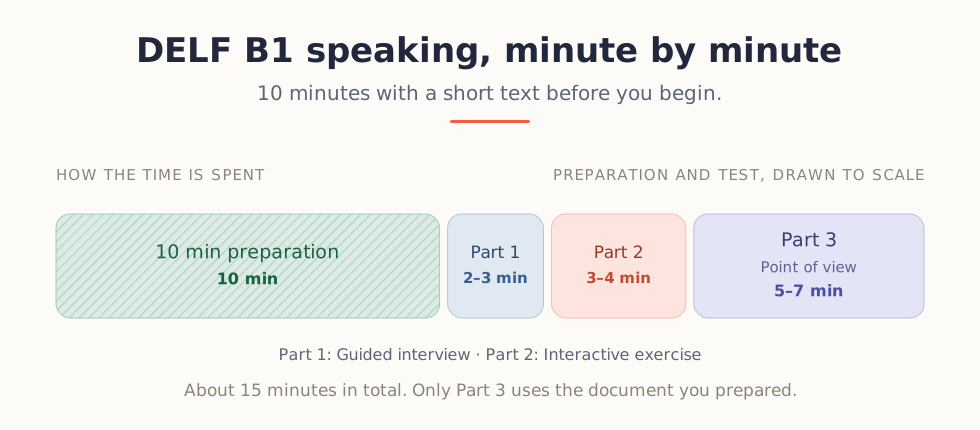
Format
| Part | Duration | Description |
|---|---|---|
| Part 1 | 2-3 minutes | Guided interview |
| Part 2 | 3-4 minutes | Interactive exercise |
| Part 3 | 5-7 minutes | Point of view expression |
10 minutes preparation time before the test begins, for Part 3 only. The whole oral runs about 15 minutes.
Part 1: Guided Interview
Deeper conversation about your life, experiences, and opinions.
Topics include:
- Work or studies in detail
- Past experiences and what you learned
- Future plans and goals
- Opinions on everyday topics
Example questions
Pourquoi avez-vous choisi ce métier ou ces études ?
Racontez un voyage qui vous a marqué.
Quels sont vos projets pour l'avenir ?
Tips:
- Give developed answers (not just yes/no)
- Use past tenses correctly
- Express cause and consequence
Part 2: Interactive Exercise
A role-play or problem-solving situation requiring you to convince, negotiate, or find solutions.
Example scenarios:
- Convince a friend to join an activity
- Negotiate a solution to a housing problem
- Plan an event together
- Resolve a dispute or misunderstanding
What they evaluate:
- Ability to express opinions
- Ability to react to the other person
- Use of appropriate register (formal/informal)
- Logical argumentation
Part 3: Expressing a Point of View
You receive a short text on a current topic. After preparation, you:
- Summarize the main idea
- Express your personal opinion
- Discuss with the examiner
Common topics:
- Technology in daily life
- Environment and lifestyle
- Work-life balance
- Education and learning
- Social changes
The five minutes divide neatly into three moves, and examiners notice when a candidate has planned them:
Structure:
- Summary (30-45 seconds): Present the main idea
- Opinion (1.5-2 minutes): Share your view with arguments
- Discussion (1-2 minutes): Answer examiner's questions
Tips:
- Use opinion expressions: je pense que, à mon avis, il me semble que
- Give concrete examples to support points
- Be ready to defend or nuance your opinion
Common B1 Speaking Topics and Sample Answers
Part 3 gives you a short text or a statement and asks you to react to it. The subjects rotate around a small set of social themes, and knowing which ones lets you prepare vocabulary in advance rather than hunting for words in the exam.
Two more, worked the same way
Phrases worth memorising for any subject
| Function | Phrase |
|---|---|
| Give your position | À mon avis... / Personnellement, je pense que... / Je trouve que... |
| Add an example | Par exemple... / Prenons le cas de... / Je vais vous donner un exemple. |
| Concede | C'est vrai que... mais... / Bien sûr, ... cependant... |
| Contrast | D'un côté... d'un autre côté... / En revanche... |
| Conclude | Donc, pour conclure... / En résumé... / Finalement, je dirais que... |
The examiner will push back after your monologue. That is not a sign you answered badly, it is the débat part of the exercise, and holding your position while acknowledging theirs is exactly what earns marks in the interaction criterion.
DELF B2 Speaking Test
At B2, you must argue a position convincingly and engage in sophisticated discussion.
Format
| Part | Duration | Description |
|---|---|---|
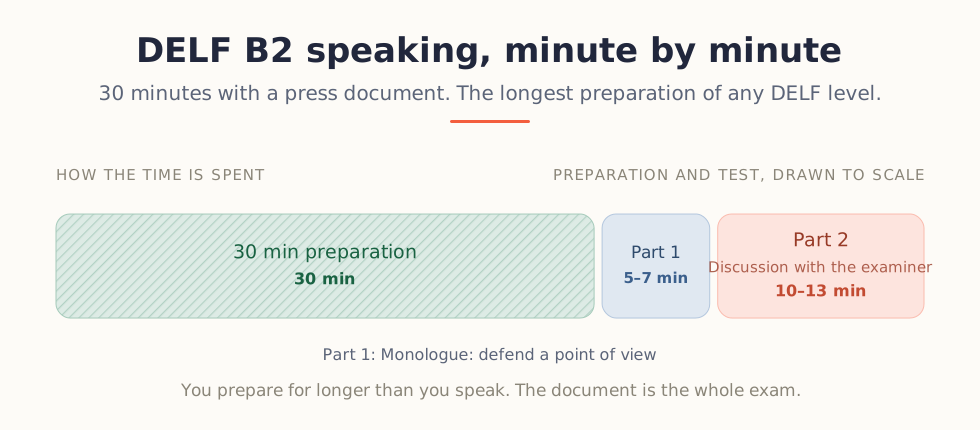
| Part 1 | 5-7 minutes | Monologue: defend a point of view |
| Part 2 | 10-13 minutes | Discussion with examiner |
30 minutes preparation time before the test.
The Document
You receive a short text (usually a newspaper article) presenting two sides of an issue.
Common themes:
- Social issues (work, family, urban life)
- Technology and society
- Environment and sustainability
- Education reform
- Cultural debates
Part 1: Monologue (5-7 minutes)
Present your analysis and argue your position.
Structure:
- Introduction (30-45 seconds)
- Introduce the topic
- State the main question/problem
- Announce your position
- Development (3-3.5 minutes)
- Present arguments logically
- Use examples and evidence
- Address counterarguments
- Conclusion (30-45 seconds)
- Summarize your position
- Offer perspective or nuance
Key skills evaluated:
- Clear, organized presentation
- Relevant, developed arguments
- Use of complex structures
- Appropriate vocabulary
Part 2: Discussion (10-13 minutes)
The examiner challenges your position, asks for clarification, and explores the topic deeper.
What to expect:
- Questions about your arguments
- Counterarguments you must address
- Requests for examples or evidence
- Exploration of nuances
Tips:
- Stay calm when challenged
- Acknowledge valid points from the examiner
- Use nuancing expressions: certes...mais, il est vrai que...cependant
- Be ready to adjust your position if needed
Common B2 Speaking Topics and Sample Answers
At B2 you are not asked for an opinion out of nowhere. You get a short press document and have to build a position from it. The documents are drawn from a predictable pool of societal debates, which is what makes preparation possible.
What separates that from a B1 answer
| B1 does this | B2 adds this |
|---|---|
| States an opinion | Reframes the question before answering it |
| Gives an example | Weighs the source's argument, then qualifies it |
| Uses mais, donc | Uses toutefois, en revanche, cela étant, il n'en demeure pas moins |
| Concludes by repeating the position | Concludes by shifting to what actually matters |
In the débat, the examiner will deliberately contradict you. Conceding a point you genuinely find reasonable, then explaining why it does not overturn your conclusion, scores higher than defending everything you said. Candidates who treat the discussion as an argument to win tend to lose marks on the interaction criterion.
Evaluation Criteria (All Levels)
Examiners evaluate five main areas. They are the same five at every level; only the standard expected of each rises as you move up.
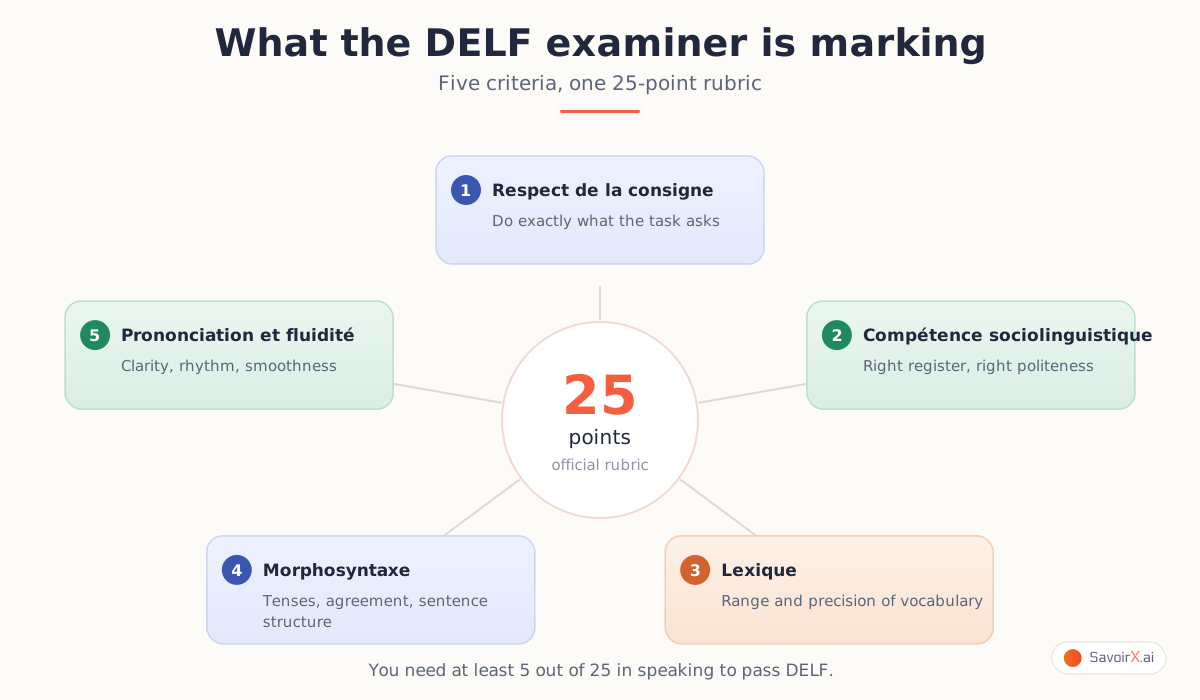
1. Task Completion (Respect de la consigne)
Did you understand and complete what was asked?
- Follow instructions correctly
- Address all parts of the task
- Stay on topic
2. Sociolinguistic Competence
Is your register appropriate for the situation?
- Formal vs. informal language
- Politeness conventions
- Cultural appropriateness
3. Vocabulary (Lexique)
Is your vocabulary adequate for the topic?
- Range of vocabulary
- Precision of word choice
- Ability to paraphrase when needed
4. Grammar (Morphosyntaxe)
Are your sentences correctly constructed?
- Appropriate tenses
- Agreement (gender, number)
- Sentence structure complexity (varies by level)
5. Pronunciation and Fluency
Can you be understood easily?
- Clear pronunciation
- Natural rhythm and intonation
- Fluency (not necessarily fast, but smooth)
Common Mistakes to Avoid
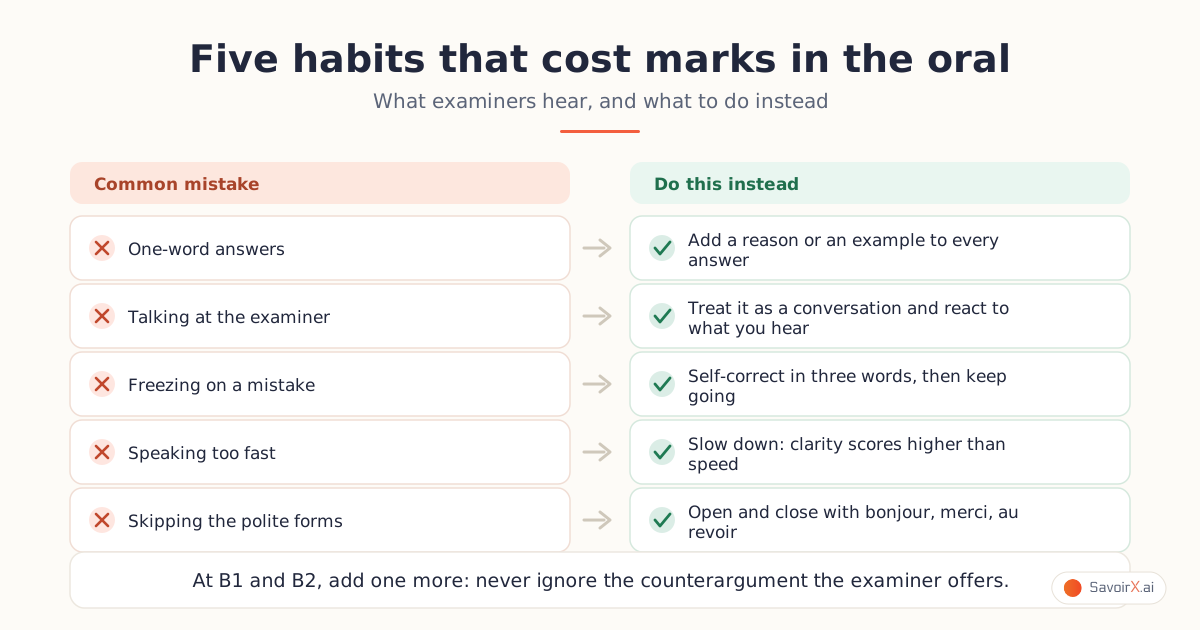
Most lost marks come from a handful of habits rather than from gaps in French. The chart below pairs each one with the fix.
At All Levels
- One-word answers: Always develop your responses
- Ignoring the examiner: The test is a conversation, not a monologue
- Freezing on mistakes: Self-correct briefly and continue
- Speaking too fast: Clarity matters more than speed
- Forgetting politeness: Always use appropriate greetings and forms
At Higher Levels (B1-B2)
- No structure: Organize your ideas before speaking
- No examples: Abstract arguments need concrete support
- Ignoring counterarguments: Acknowledge other perspectives
- Over-complicating: Clear ideas beat complex-but-confused ones
Preparation Strategies
Speaking preparation splits into three different jobs: getting comfortable producing French at all, keeping it moving when your thoughts outrun your words, and having something ready to say on the topics that keep coming up.
Build Speaking Confidence
- Practice out loud daily: Even 5 minutes helps
- Record yourself: Listen back to identify weaknesses
- Practice with a timer: Get used to speaking for required durations
- Simulate the test: Practice with a friend or tutor playing examiner
Improve Fluency
Fluency at the oral is largely a matter of having ready-made French for the moments when your thinking runs ahead of your speech.
1. Learn transition phrases
D'abord, ensuite, enfin
D'un cote... de l'autre
Par exemple, notamment
2. Practice self-correction
Pardon, je voulais dire...
Non, en fait...
3. Have phrases ready for when you get stuck
Pouvez-vous répéter ?
Je n'ai pas bien compris la question.
Topic Preparation
For B1-B2, stay informed about current topics:
- Technology and daily life
- Environment and sustainability
- Work and education
- Social changes and trends
Practice With an AI Examiner
The hardest part of DELF speaking preparation used to be finding someone to play the examiner. SavoirX now runs full mock speaking exams for DELF A2, B1, and B2, with an AI examiner that asks its questions aloud and adapts to your answers.
Each level follows the official exam structure. At A2 and B1 you get the 10-minute preparation window, then move through the guided interview, the monologue, and the interactive role-play (at B1, the monologue is followed by a débat with follow-up questions, as in the real exam). At B2 you get the 30-minute preparation time with a short press document, deliver your présentation, then defend your position in a débat with the examiner. You can also practice any single part on its own instead of sitting the whole exam.
At the end of a session you receive a score on the official 25-point rubric with a CEFR estimate, corrections, and fluency metrics, plus the transcript and audio replay of the whole conversation.
Day-of-Exam Tips
Before entering:
- Arrive early to calm nerves
- Review key vocabulary and phrases
- Take deep breaths
During the test:
- Greet the examiner(s) politely
- Listen carefully to instructions
- Use your preparation time effectively
- Make eye contact and speak clearly
If you struggle:
- Ask for clarification if needed
- Pause to think - it's better than filling silence with "um"
- Self-correct smoothly and continue
- Don't apologize for mistakes - just fix them
Scoring Breakdown
Remember: You need at least 5/25 in speaking (plus 50/100 overall) to pass DELF.
Practice Resources
What is worth practising with shifts as you climb. The lower levels need description and exposure; B1 and B2 need argument.
For All Levels
- Practice describing pictures and situations
- Record voice memos on daily topics
- Watch French videos and summarize what you heard
For B1-B2
- Read French news articles and practice summarizing opinions
- Debate topics with study partners
- Practice timed monologues (5-7 minutes at B2)